Tuesday, January 29, 2008

Tim Krabbé's The Rider

Great books on cycling generally fall under the category of racing history. Whether the race was last year or the last century, recounting the exploits of the greats is usually a requisite ingredient to give a writer something interesting enough to write about with some style. The point behind this assertion is that great cycling books are of a kind; they do not come from the categories of fix-it manuals (as well done as some are), guidebooks or training manuals.

Novels almost never figure in the category of cycling books, good or bad. The Rider, by Tim Krabbé is therefore special for two reasons. The first reason is that it is a novel on cycling. That alone makes it noteworthy, if not automatically worth reading. The second reason The Rider is interesting is the simplest reason why any book is worth reading: It is extraordinarily well written.

Each time I read this book (don’t ask how many times I’ve been through it) I marvel because it captures perfectly the mindset of the racing cyclist. It also captures the otherness of the introspective cyclist, which is, in my estimation, a harder, more ephemeral mindset to communicate, yet he does it crisply from the book’s opening:

"Meyrueis, Lozere, June 26, 1977. Hot and overcast. I take my gear out of the car and put my bike together. Tourists and locals are watching from sidewalk cafes. Non-racers. The emptiness of those lives shocks me."

His Spartan writing style recalls the simple journalism of Hemingway and yet his alienation from such an ordinary pursuit—sitting at a café—is Kafka-esque. It’s an alienation that any dedicated roadie has felt at some point.

The Rider was published in 1978 but wasn't translated into English until 2002 by Sam Garrett. That we had to wait so long to enjoy Krabbé's work of art is tragic.

If you forget for a moment that the story is a novel and just read it as a memoir of a single day—yes, it recounts a single race—and read it as an exploration of the racer’s psyche, it stands up as one of the finest meditations on what it means to race a bicycle ever written—if not the absolute finest. Written as only a true insider could do, the details are as familiar as they are humorous, such as the racer nicknamed le douze in honor of the fact that he rides with a 12-tooth cog just because Eddy Merckx had one.

Krabbé’s insight into the racer’s mentality as evidenced by his ability to gather quotes by the greats and use their words to demonstrate the truth of the belief. He writes: “Bicycle racing is a sport of patience.” True enough. But then he backs it up with my favorite quote on what it is to wait for the right moment to attack: “’Racing is licking your opponent’s plate clean before starting on your own.’ Hennie Kuiper said that. Lebusque will stay out front for kilometers. Where would we be without Lebusque? Lebusque doesn’t know what racing is.”

What Krabbé knows is what only a dedicated racer knows. “If anyone really attacked now, I wouldn’t be able to follow. Can they tell that by looking at me? I’m too exhausted to hide my exhaustion.”

There is a reason why the crew at Rapha have lionized Krabbé’s exploits in the Cevennes. The Tour of Mont Aigoual is the very stuff of myths—a place few cyclists know, Category 1 and 2 climbs, teeth-gritting descents, epic weather, suicidal competitors and of course the eternal calculus of competition.

For the person who has never raced, The Rider will likely scare them the way the dark scares children. For the roadie who never lost the taste for the attack and the drag to the finish, The Rider may be the truest statement you ever read about your life.

Friday, January 25, 2008

Review: Cervelo SLC-SL


Frankly, I’m not sure which is more interesting: Cervelo’s web site or their bikes. I’ve always admired bike companies that will take the time to explain the thinking behind their products. It’s rare that a company will discuss the development of a product in any real depth. Rarer yet is the company that will help a consumer evaluate which bike might be most appropriate for said consumer. If all the company offers are mountain bikes, road bikes and the odd time trial bike, no real assistance is needed because if someone can’t decided between off-road or on or crits vs. triathlon, well, they need more help than a bike company can offer.

That’s what makes the Cervelo site so much fun. Frankly, there’s so much information, so many articles and presentations, I have yet to see it all. Perhaps the most interesting of the bunch is the presentation “Col de la Tipping Point.” It’s an examination of whether a rider is better off using an aero bike vs. a super-light climbing bike … even on a mountain stage of the Tour de France. They examine Frank Schleck’s choice of the SLC-SL on the day he won the stage up l’Alpe d’Huez. The math involved seems solid enough, though some of the assumptions may be up for some debate.
Their determination: The SLC-SL gave Schleck the advantage he needed to win, more than he would have gained with an R3 SL.

Verifying this sort of advantage, unfortunately, is nearly impossible. There’s no way to control for all the variables you’ll encounter in rides in order to test one bike against the other. And that’s the frustration with this bike. Riding a bike that is unusually light, or at least lighter than your daily rider, is immediately apparent. And while I’ve seen plenty of nerds do the math to show that losing 1.5 lbs. off a 15 lb. bike is a less than 1 percent change in weight once you factor in the weight of a 150 lb. rider. This is bunk. The difference between a 15 lb. bike and a 16.5 lb. bike is immediately apparent. That 10 percent increase in weight is significant enough to be noticeable to any rider.

But what about aerodynamics? I could ride the SLC-SL back to back with a bike of equal weight but inferior aerodynamics for weeks and am not sure I’d be able to define the difference. In my rides on the SLC-SL a funny thing did happen, though. Every time I was at the front of a ride, I started to wonder if the bike was giving me an edge. Ah yes, the power of the placebo effect. And every time I had that thought, I felt ridiculous.

A small note on the internal cable routing: It rattled worse than my nerves in an earthquake. After two hours I was homicidal over the noise. As the bike wasn’t mine and I didn’t have it for a month, I didn’t have time to find out how to shut it up.

And while this review is about the Cervelo and not about the Shimano Ultegra-SL, I need to take a moment to say how impressed I was. If I had not known the components were not Dura-Ace, I might never have figured it out from their performance. The weight was impressive, shifting performance was excellent and brake response was adequate, though it seemed not quite as easy to modulate as the Dura-Ace stoppers.

Inevitably, the question of why someone would ride an aerodynamic road bike instead of a time trial bike comes up. After all, time trial bikes use designs that maximize the bicycle’s aerodynamics. And while better aerodynamics is faster, the fact is, aerodynamics aren’t everything. The best time trial bikes aren’t as stiff as the average road bike is at the head tube. This is to give riders improved comfort over long time trials (such as the Ironman), something they can afford given their events don’t end in sprints.

My lasting impressions of the SLC-SL were these: The SLC-SL handled with great agility, but enough stability to keep me out of trouble. The bike had great torsional stiffness, nearly that of the Specialized Tarmac or the Felt F1. However, the aero seatpost was as stiff as any of the integrated seatmast designs I have ridden so far. It was extraordinarily stiff vertically. The term vertical compliance came up only in the negative. It’s a great bike, just not for a century. I’m aware that CSC riders are capable of covering 150 miles on this bike, but we have the power of choice. Were I racing crits and trying to ride off the front, this would be a first-round draft.

Thursday, January 24, 2008

Wednesday, January 23, 2008

Teams of Portland

Like the timer in the game Perfection, Portland, OR is set to go off in a few weeks, and the bike scene is about to come face-to-face with just how massive it really is.

Don Walker kicks off his fourth iteration of the Handmade Bicycle Show and it is sure to out-do the three previous shows. Each year, attendance has increased and the exhibitors have worked harder and harder to showcase their very best work.

In typical Portland style, there are pre-events, post-events and events in-between, and most will include great coffee and cheap beer, but all will include a steady dosage of bike culture.

The one event that stands out is the Teams of Portland exhibit, a showcase that spotlights local racing teams, culture squads (thanks CD) and good time clubs that feature the bikes, kits, and hangouts that make our sport (and Portland's scene) so amazing.

Teams of Portland is presented at Wieden + Kennedy; Nike's ad agency and the force behind Road to Paris.

Monday, January 21, 2008

Crystal Ball

So will Team Slipstream go to the Tour de France? They’ve been invited to the Giro d’Italia, Taylor Phinney just won Gold in the pursuit at a World Cup race, and Julian Dean has repeated as the National Champion in the road race.

With all due respect though, so what? Not that they aren’t good enough to go—that’s not it. No, the fact is, while those things are nice, they aren’t exactly bona fides. No, if you want to go to the Tour de France, you need wins in the spring, preferably in ASO-owned events. It’s a simple and fair formula: If you want to kiss the girl, buy her flowers.

It doesn’t hurt that Magnus Backstedt has won Paris-Roubaix, or that David Millar and David Zabriskie both won time trials at the Tour and wore the maillot jaune. Each of those is great but, well, what have they done lately? And by that, the question is, what, exactly, did they accomplish last season? It’s quite a demand.

Don’t worry: the question is irrelevant. Unless the team utterly tanks this spring and gets dropped en masse from each and ever race they enter, Slipstream will be at the Tour come July. Here’s why:

Even if by a miracle of psychosis most folks believed that the athletes caught up in the recent drug scandals were all completely innocent of all the accusations, a belief comparable to thinking that evolution was just a cute idea, the fact is any reasonable person must conclude that the mere specter of doping has clouded our opinion of sport. Name a sport—other than curling—that hasn’t had some whiff of the illicit. If you have come up with one, you are a better person than I.

Put simply, the Tour de France has been injured by athletes accused of doping to win the largest annual sporting event in the world. Let’s try not to be surprised.

Supposing you were the director of the Tour. What would you do?

The way I do the math tells me that I would seek out any and every team that has garnered publicity for running a clean program. If media attention can be considered a reliable yard stick, CSC, High Road and Slipstream are running the most noisily clean programs in the sport. It is notable that WADA’s Anne Gripper, in speaking with the members of Slipstream at the team’s intro in Boulder recently, actually wished the team good luck. Given the extraordinarily adversarial relationship of WADA to most athletes—and vice versa—Gripper’s attitude toward Slipstream is refreshing, and largely attributable to the program’s transparency; Vaughters is the world’s first NASCAR crew chief inviting officials to look under the hood of his car … every other week.

Slipstream needs an invitation to the Tour de France because Vaughters made a wildcard invitation one of the team’s biggest goals of the season. He could just as easily have said he wanted to win the Eneco Tour. His choice. However, the Tour de France can’t survive another five years like the last two. Even three more years of embarrassing revelations about the yellow jersey—whether true or not—will see even the event’s most die-hard sponsors flee. The Tour de France needs Team Slipsteam to help restore its prestige, even as Vaughters’ young unit looks to confirm its legitimacy.

Tuesday, January 15, 2008

The Green Line

Michelin is best known for its tires. After that, its reputation as the arbiter of the greatest achievements in gastronomy is only mildly in dispute. For the veteran traveler, the guides to hotels and tourist destinations—le guide rouge et le guide vert—are two inarguable sources of helpful information. What most people can’t reconcile is how a company known for making tires for cars (and motorcycles and bicycles, of course) could also be the consummate reviewer of restaurants. The connection is as tenuous as, say, an action film star becoming Governor of California.

But there is a connection and when you see it, suddenly Michelin’s magnanimity takes on such mythic proportions as to seem like a new take on philanthropy. The connection between Michelin’s pneumatic products, its restaurant guides, hotel guides and tourist guides are maps. You see, Michelin is in the travel business. Rather than offering package tours, cruises or cheap airfare, they supply those items a traveler of roads might need: Directions, food, lodging and a good time. What could be more obvious?

Its three-tiered ranking system awards stars based on criteria that have been called incontrovertible, objective, idiotic, old-fashioned, ingenious and arcane. Even if not everyone agrees to the judgments, the system is easy to understand and offers travelers a reasonable starting point for trip itineraries.

But perhaps Michelin’s greatest achievement aren’t the tires or the primers on Gothic architecture or the surveys of French wines, but that most necessary of travel aids, the map. Due to a map's essentially objective nature there isn’t much to make it likable or revolting in measures small or large. Yet Michelin has found a way to distinguish itself by offering maps that are easy to read. And because it is the Michelin staff’s very nature to evaluate and review whatever it encounters, its cartographers have determined that not all roads are created equal. Some roads, to paraphrase, are more equal than others.

The green line is Michelin’s way of saying, ‘You’ll remember this drive for the rest of your life.’ Now, depending on just where you are, that might mean beautiful or breathtakingly precarious, but that’s your call. The larger point is that every road that offers an exemplary view gets a green stripe hugging the road itself.

Those green lines are a cyclist’s best friend after the bike itself. An interesting road is like news: To keep one’s attention, there must be changes, undulations, unexpected twists and turns. No one ever called the driving in Nebraska beautiful. And yet everyone talks of a drive through the Alps as being beautiful, but also a little scary.

For the cyclist who uses maps as a way to fantasize about the vacation not yet taken, Michelin maps are the HDTV of the cartographic experience. Arguably one of the finest spiral-bound documents ever assembled is Michelin’s atlas of France. Compiled in 1:200,000 detail, the atlas leaves no asphalt ignored in its corralling of each and every road in France. And as great as that atlas is, Michelin offers other treasures you may not know about unless you visit France. Little known are the 300-series maps in 1:150,000 scale. The green line threads its way up and down mountain passes like ribbon through a young girl’s braid. Each switchback and chevron spell a cyclist’s playground, an epic day just waiting to happen, a family album to the Tour de France, monuments to the greatest battles on French soil.

Tuesday, January 8, 2008

Paris Roubaix: A Journey Through Hell

Both victories began the same way. With a monster bridge up to a small group of leaders: Tete de La Course.

The suffering is unlike any I have felt before. The pain in my legs is overshadowed by the pain in my lower back. My teeth split small granules of the farmer's field as I close my mouth in search of relief from the dryness. My fingers are stiff like twigs and my eyes are searing from the swirling dust. I have the strength and the constitution to close the deal, to ride into the velodrome alone, with enough time on my rivals to adjust my jersey and to savor the moment. I ride the last 100 meters and my eyes well up, the tears begin to flow, I release the pain and suffering that has built up over the course of the day in a flood of emotions. I've received the ultimate gift from the Queen: the opportunity to call her my own for one year. My reward? A place in cycling history realized in the form of a plaque hung in the famous concrete showers.

As an adult, I don't dream the same way I used to. The dreams of flying replaced by dreams of losing my teeth and punching underwater. The stresses of adult life have squashed the youth right out of my slumber. However, over the month of December, I have on two occasions drifted off to sleep and awoke in the morning a winner of Paris Roubaix.

I attribute the victories to my time spent reading Paris Roubaix: A Journey Through Hell, the new book published by VeloPress. Paris Roubaix (PR) is a comprehensive collection of past and present race images and detailed accounts of its history, having more depth than most PR accounts.

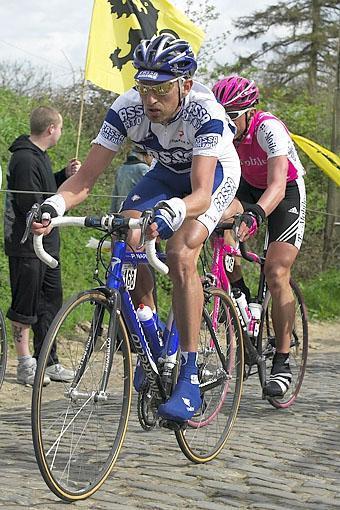
The essence of the book can be felt as you lay it on your lap and begin to page through it. The cover image shows a lone rider, Johann Museeuw, in his prime and entrenched in the mud. You can just hear the cacophony of sounds screaming from the rabid fans. A yellow Lion of Flanders flag stands out as one of the only splashes of color on the cover (the mud muting all others). To a bookstore passerby, the cover image alone would pique the curiosity of the un-indoctrinated: The cover shot is an ode to the material contained inside, a photo capturing all the things that draws one to this race.

Inside, the history of the race is laid out in simple form making it easy to devour large portions of the book in single sittings. As a fanatic, I've spent far too much time studying the images of the world's greatest one day race, where many of the images have become icons: Tchmil's muddy 1994 victory, the view down "The Trench," and the crown of the cobbled farmers' paths that reveal cavernous gaps between the stones (those wide enough to swallow up an unsuspecting tourist!). The images in Paris Roubaix captures a humanistic perspective that draws in the reader and annotates the surrounding text.

Something about this book has grabbed me in a way no other cycling book ever has. Mind you, Philippe Brunel's 1996 An Intimate Portrait of the Tour De France spoke to me, but this book punched me so hard it knocked a tooth loose. The book is a refreshing look at the world's greatest one day race, a race that over the past years has been distilled to fit neatly in a series of thumbnails on a Web page. Images lacking depth and truth. A Journey Through Hell brings the race back to life, capturing the faces of the people who make the race what it is. From the PROs themselves to the police to the spectators, this book packs your lunch and drags you and your family out for a day at the races.

Immerse yourself in this great race and at the very least, sip an espresso at your local bookstore while thumbing through the pages.

Then, try walking out without purchasing a copy of your own.

Paris Roubaix: A Journey Through Hell
VeloPress 2007

Tuesday, January 1, 2008

Low-Slung Fun

When presented the opportunity to build a bike start to finish, I elected to put my theory that cyclocross bikes are built with too little BB drop to the test. I had theorized for some time that a bike that handled more like a traditional stage racing bike would be easier to lean through the tight turns of a cyclocross course.

So the $64,000 question is: How does it handle? My experience in riding the bike I built under Stanton's guidance has been that the greater-than-usual BB drop does help the bike corner better than other cyclocross bikes I have ridden. Cornering clearance has not been a problem. On broad, sweeping crit-style corners where I have seen other riders pedal through the whole of the corner, I have been able to pedal through as well. On the super-tight corners that I have only ever seen in cyclocross courses, corners where the course sometimes literally doubles back on itself is where my rig really excels. I have been able to corner much more aggressively than many other riders. Likewise, I’ve noticed in watching other categories race over the same course that the corners I coasted through were corners other racers coasted through as well.

While I expected the bike to corner well, there were two other, subtle, handling assets I didn’t anticipate. I noticed that in riding through frozen ruts, or any ruts for that matter, that I tended to be thrown off my line less than other riders around me. And on the opposite end of the spectrum (though I believe the handling issue to be related), on sandy stretches I was much more comfortable allowing the bike to slide and drift than I have been on any other ‘cross bike. Indeed, one of my favorite memories of riding this bike was in my district championship and and feeling the bike drift slightly while hammering under full power over sandy hardpack.

But don’t take my word for it. When Tim Rutledge, the former product manager for Redline first got the green light to introduce a Redline cyclocross frame and fork, he elected to design a bike that would handle like a traditional road bike when equipped with a 23mm clincher. He modeled the geometry after two bikes he saw reviewed in Bicycle Guide: an Eddy Merckx and Mario Cipollini’s custom Cannondale. Both were built around 7.5cm of BB drop. Rutledge has moved on to other pastures and Redline’s geometry has evolved to reflect that the company now offers complete road bikes, but Rutledge won a master’s national championship (as did several others) aboard the bike he designed.

The tragedy here is that no one truly understands the interplay of all aspects of bicycle geometry. By that I mean, there isn't an engineer out there who can explain in objective terms how each dimension relates to the others. We know in broad strokes how they relate, but as the previous comments have shown, there is some disagreement about what one truly experiences as bottom bracket height changes. Our use of terminology confuses the issue: Is a bike with a low bottom bracket (7.5cm of drop or more) more stable or more maneuverable? It comes down to how you think about bicycle handling. And while the specific differences in physics between how two-wheel and four-wheel vehicles handle are substantial, I do believe the differences in handling between a Mini Cooper and an SUV do help to illustrate the difference in sensation, because what is at stake is a matter of perception--if the rider or driver perceives confident handling, greater speed seems possible and not unreasonable.

While it is true that I could have shortened the bike’s trail or wheelbase, both those approaches have liabilities related to tire clearance and toe overlap that must be worked around. I think most builders would say that less trail will make a bike more responsive, but that isn’t the same thing as cornering easily and what I was looking for was a bike that I could lean without fighting, a bike that increased my sense of confidence when in a corner. I found a design that I like, no more no less. Ultimately, the question is why the industry continues to follow a convention based on a piece of equipment no longer used, a convention which can be validly questioned.

Vacation Frame Building Camp


Talking to frame builders is a dangerous business. If you do it enough, you begin to think you know the craft. You start to develop your own ideas about frame geometry, the lines of a seat lug and how your name for a bike would be way better than what is out there.

Disabusing us of these ideas isn’t the business of the frame builder. Rather, we are left to our own devices and either we learn just how skilled the torch bearers are, or we decide to take up the craft ourselves. A few years ago, I was invited to take a middle road.

For those who follow the ranks of juniors, Toby Stanton is known for producing more national championship winning riders than any two coaches combined. Jonathan Page, Robby Dapice, Jesse Anthony, Larssyn Staley, Saul Raisin and Will Frischkorn all called him coach. He also builds and paints frames under the label Hot Tubes and in the late 1990s he began teaching frame building classes to the curious.

The class takes the uninitiated from un-mitered tube to painted frame. Choices along the way include lugs or TIG welding, not to mention the opportunity to design your own logo. Some in the industry have expressed some skepticism about Stanton’s ability to impart all that a frame builder needs to learn in a single 9-5 week. He is clear with everyone the workshop is not a trade school for future professionals, though that's not to say builders haven't apprenticed under him. Upon my arrival he stated repeatedly, “This is about your comfort level; you can do as much or as little as you want.” You could say it is frame builder fantasy camp—a guided tour, if you will.

For me, it was the perfect opportunity to test my theory that a ‘cross bike with a lower BB would corner more easily. What we settled on was a cyclocross frame with a 59-centimeter seat tube (measured center to center), a 58cm top tube, 42cm chainstays, 43 mm of fork rake, parallel 73-degree seat and head tube angles and the kicker: 7.5cm of bottom bracket drop—a full centimeter lower than most ‘cross frames. With a set of road clinchers this bike would have the bottom bracket height of a traditional Italian stage racing bike, about 26.5cm. Toby walked me through the steps for producing the drawing, which detailed the angle of each junction and each tube’s length down to the millimeter. We then mitered each tube and began fitting them together in the frame jig.


While the experience wasn’t meant to make you think like a framebuilder, Stanton’s coaching gifts came into play as we moved through each step. He would ask questions about each step to see if I understood why we were doing things in a certain way. Each question served to illustrate the methodical thinking a good frame builder must use to produce a strong and straight frame.

Most tubes received two cuts per end: one for the angle and one to conform to the round profile of the tube. I deburred each end on a belt sander, filed each edge square and Dremeled the inside of each lug smooth. Only then did we begin brazing.


The first thing I learned about the torch was that even though silver has a low melting point, we were working with temperatures in excess of 1000 degrees Fahrenheit. I had the skittish demeanor of a schoolboy trying to light a roman candle from 50 paces. Stanton passed his hand 10 inches in front of the flame without wincing. In doing so he demonstrated the most crucial facet of the framebuilder’s craft: heat is dispensed only where it needs to be. With a flame as small as he uses (he, like many builders, uses the smallest tip available: #0) what he waves around has all the focus of a camera lens opened up to F2—virtually no depth of field. What he gave me to wave over the joint had nothing in common with a flamethrower.


On the four joints of the main triangle he broke me in gradually, demonstrating first and then handing over the torch and silver rod. In a few spots where I seemed to have trouble coordinating torch and rod he let me hold one while he deftly wielded the other. Trying to heat the seat tube/bottom bracket joint while holding the silver rod in the right spot and see the joint without having some part of your anatomy brush up against hot steel is a little like driving a stick for the first time.
I burned up some flux, left some globs of silver and, in short, did what seemed really questionable work. Stanton’s voice was even and patient: “Okay, now you’re burning up the flux, so back off on the heat.” Once the brazing was complete, the filing began.


We had done nothing to alter the basic line of the lugs themselves, but I wanted to make sure that I thinned the points as well as removed all the casting seams. For an experienced builder the process is simple, but for the uninitiated, a minute can go by while you try to choose the right file to work on a curve. It seemed as if Stanton could remove in three file strokes what it took me ten or more to accomplish. Builders will talk about how silver is soft; don’t believe them. Silver is still metal and this precious element doesn’t file away like the wood in a Cub Scout’s Pinewood Derby car. Day two ended as day three would begin: with me filing.

By the time we brazed the fork my skill had improved dramatically, but I still waivered between so little heat that I bent the silver rod rather than feeding it in and heating the joint to the point that the silver was practically sucked into the joint like a chocolate bar into the maw of a five-year-old.

We checked both the frame and fork for alignment and I attempted to hide my amazement: They were as straight as a Nevada highway. Stanton handled the sandblasting and painting duties, though I understand he now guides students through these steps as well.

In 40 hours (maybe a bit more) we went from uncut tubes and a simple theory to a finished frame. After baking the paint overnight, I assembled it into a bike and raced it a day later at ‘cross nationals.

Given the long nature of this post, my riding experience will come in a subsequent post, an unexpected Part III, if you will.

Friday, December 28, 2007

Frank Vandenbroucke

VDB defines the Euro PRO look. If there's a style guide for the neo-pros in Europe, VDB wrote it. Whether it's his calf-high shoe covers, drop-top arm warmer style, the seemingly careless roll of the handle bars, or the ever-present sheen of the BKW, VDB embodies it all. And, of course, the dude is from the cycling capital of the world. Almost every team in the PRO Tour has offered him a spot at one time or another. Team Directors are willing to run the risk of hiring him because maybe, just maybe, he will show his brilliance again while on their watch.

VDB has unparalleled natural talent. In 1999, VDB showed the greatest promise of any of the neo-pros by winning Het Volk and Leige-Bastone-Leige. In fact, he won LBL with a style reminiscent of Babe Ruth by announcing before the race his plan of attack. Frank's talent is further evidenced by his performance at the Tour of Flanders in 2003. The dude shows up with fewer spring miles than a club cyclist, makes the break, and holds onto VanPetegem for second spot on the podium. Frank carries a natural talent; one that defines the sport. Just one look at VDB's position on the bike and his fluid riding style will make you green with envy. Frank was born to race bikes. Frank has been a teammate of almost every big name in recent cycling; mostly because he changes teams annually.

The 2007 season is wide open for Frank. With a new team (Aqua Sapone) and endless natural talent, the PRO world is VDB's oyster. "Come on Frank, one more time? Show the new guard how it's done."

Frank Vandenbroucke was originally posted on 12-6-06 and seemed like a good follow-up to the VDB video.

Monday, December 24, 2007

Wednesday, December 19, 2007

How High?

In a world full of absurdist concepts, I’ve got one that won’t make you blink: Your bicycle is on your shoulder and you don’t live on a second story walk-up. You are running through a farm pasture, have not committed a crime and your bicycle works perfectly well.

Sounds like a great time, huh? Such is our love of cyclocross. There’s something in this equation that doesn’t quite add up, and it’s not that we carry our bicycles. It comes when we put that bike back down and willingly lob our asses skyward. Whether we have dreams of procreation or not, the delicate business means landing sidesaddle in proximity to a collection of biology known to us primarily for its ability to remind us of what NOT to do, the event is meant only to speed our return to the pedals. Click, click—and we’re off again.

Years ago the process was a little more involved. You had to hit each pedal with your foot, flip it over and jam your foot back in. Because races took place on grass, the bicycle’s bottom bracket had to be much higher than that of a traditional road bike so the toe clips wouldn’t drag in the grass—this is a detail the Frogs figured out in the 1950s.

Fast forward to, oh say, now. Swing the right knee skyward and once safely aboard, the feet go straight into the pedal stroke, no flipping over of the pedals.

So why are bottom bracket heights on cyclocross bikes still on average 2cm higher than those on road bikes?

It wouldn’t be a cause for concern were it not for this little detail. Name another cycling event where the rider makes tighter turns? Add to that the fact that these oh-so-tight turns are conducted aboard bikes with 700C wheels and it’s fair to ask the question: What can we do to make this bike easier to turn?

The answer is simple: Make it easier to lean the bike over to carve a tight turn. Okay, so how do you do that? Simple. Lower the bottom bracket. Drop the center of gravity of the bicycle and leaning the bicycle into a turn becomes a good bit easier.

How much could it be dropped? It’s hard to say; there hasn’t been much experimentation with this. Pedaling through corners doesn’t happen to the same degree it does in crits, so dragging a pedal through the dirt isn’t a big concern.

To illustrate the point, let’s consider an example in extreme. Say you’re driving down a twisty road. Would you rather take the twists and turns in a Ford Expedition or a Mini Cooper? My preference would be for the Mini Cooper, with a center of gravity lower than most Congressional standards, it can turn circles around the SUV. Put another way, I’d rather run a steeplechase barefoot than on stilts.

I went to the trouble to build, with the help of Toby Stanton of Hot Tubes, a ‘cross bike with a low bottom bracket. In Part II I’ll describe the process of building the bike and racing it at ‘Cross Nat’s and since.

Photos courtesy Chris Milliman

Tuesday, December 18, 2007

Let it R.I.P.

Back in the day, I had the pleasure of working with an eccentric guy we called Pants. Among other things, Pants has a vocabulary that is second to none. Pants loves bunnies, excellent java and, of course, a great burrito.

But there is another side of Pants that sets him apart from the rest: Pants takes pride in his ability to ghost ride his machine further and faster than anyone else. And we are not talking about just a light roller where the bike comes to rest in some brush just up the trail. We are talking HUGE, hucking style with ample hangtime and the potential for utter devastion upon re-entry. Off a bank into a deep stream? No sweat. Into a thick of trees? Why not? Pants is never afraid of consequences and the allure of going higher and faster always tempts him.

There is eery silence that blankets onlookers when a machine has left the safety of its owner and is rocketing toward fate, alone, solo, as its momentum faces an eventual demise. No matter the conditions, no matter the company, Pants is always up for some wicked ghost riding.

Monday, December 17, 2007

The San Diego Low-Speed Wind Tunnel


BKW recently had the opportunity to tag along with a manufacturer for a trip to the San Diego Low Speed Wind Tunnel to watch some product testing. This was our first opportunity to see the fabled facility that has tested many of the bike industry's most aerodynamic bikes and parts. It has also escaped decommission death more times than James Bond.

We can't reveal who was testing, nor the results (those are embargoed for first release by the manufacturer), but we can offer a virtual tour of the facility that has helped some of the world's great riders refine position.


The facility is built on a continuous loop. The propellor that creates the wind is positioned roughly 180 degrees around the loop from where products are tested.


The propellor blades are handmade wood laminate.


Because the wind tunnel is a continuous loop, after each run, or "blow" as they are referred to, a retractable screen must be used to arrest the air flow. Trying to change products in a 30 mph wind would be cold, unpleasant business.


The facility was designed during WWII; construction began in 1944. Prior to the invention of calculators and computers, calculations were figured by a battery of slide-rule equipped staffers. Three men now do the work of more than two dozen. These photos were taken in the early 1960s.

Thursday, December 13, 2007

1961 World Championships


Bern-Bremgarten, Switzerland. September 3, 1961

Distance: 285.252
Time: 7h 46m 35s
Average Speed: 35.861 km/hr
Conditions: Cloudy, September temps
71 riders started, 32 finished

Results:
1. Rik Van Looy (Belgium)
2. Nino Defilippis (Italy)
3. Raymond Poulidor (France)

There are very few items remaining from my father's youth. Over the years, most of his keepsakes were either tossed, lost, or left behind from his move to the U.S. from Argentina. Because very few cycling pieces remain, his cycling experiences are mostly confined to memory.

A few years ago while cleaning up, my father came across an envelope containing a few small things he had collected on a trip from Buenos Aries, Argentina to Bern, Switzerland to view the 1961 World Road Championships. The trip comprised of travel by ship, train, and car to meet up with his mentor and friend, Bruno Loatti. Bruno was an Italian track and road racer who had traveled to Argentina to participate in six-day races and road events. My father had served as Bruno's mechanic throughout his stay in South America.

In 1938, Bruno had won a silver medal in the Amateur World Championships in the Sprint event and had stayed involved for many years after, racing and eventually coaching.

Digging into this envelope was a special moment for me. As his son, it provided me with a glimpse into my father's life and, as a cyclist, it was a door into the past. My father and I sat and drank Stellas as we recalled his trip and the sights and sounds of the World's. As a guest of Bruno's, it meant that my father had an "all-access" pass that gave him access to the course, and because of Bruno's continued involvement and love for cycling, he was also treated to the hospitality of the PROs, the Italian, South American, and even the Belgian, riders. My dad recalls the enthusiasm in both the Italian and Belgian camps, excitement that one of their countrymen would finish the day in the rainbow stripes. He recalls Rik Van Looy's confidence and sitting with the Belgian team as they sipped tea at 11:00 p.m. at the local cafe, too jacked up on adrenalin to sleep. He smirked as he described the crowds laughing at the Japanese team's breakaway in the 20th KM of a 285 KM race.


My dad talked about the drive home from Bern to Milan where he and Bruno smoked tax-free cigarettes at elevation, making both of them lightheaded and dizzy. We chatted about how the Alfa station wagon labored to cross the Swiss passes, and even the Swiss World's team still on their machines passing the car on the descent as they rode back to the hotel.


It was obvious to me that my dad was enjoying telling the story as much as I was enjoying hearing it. Unfortunately, because most of my dad's cycling memorabilia has been lost, the people and places are just a memory. For this very reason, it makes the 1961 Worlds even more special for both of us.

Tuesday, December 11, 2007

Guys Who Ride the Stuff They Sell

Bill McGann riding with Mauro Mondonico in Tuscany.

On a late spring morning more that 10 years ago, I visited a nondescript commercial space in Ventura County, California. Home to Torelli Imports, it was my introduction to “Chairman” Bill McGann and his wife Carol. We changed into cycling clothing and he took me for a pleasant tour of the hills surrounding his home. By “pleasant tour” I mean that Bill took me out and schooled me. I’ve felt fresher after some races. Then we went out for burritos larger than some crainia.

For those who only know Bill from his ads, it might be helpful to mention that he was a Category 1 racer for many years and once knocked out a 100-mile training ride with one other guy in four hours. Ever modest, he claims to have been the eternal 3rd, but leaves out that his era overlapped that of Greg LeMond. He grudgingly admits an exception to his eternal bronzing, the time he turned a 56 minute 40k TT on a bike with 36-spoke wheels, drop bar and brake cables flapping in the wind. He was the fastest 28-year-old going in California.

If asked how far to the top of a 10k climb, Bill will tell you, "Just a little further." It would seem he thinks anything less than two hours isn't a proper ride. His idea of a good time: pulling off the front of a paceline at 26 mph and checking your calves for signs of weakness. I know this because I’ve seen him do it repeatedly. I always fear he will shout out as Gino Bartali’s domestique did the day he saw a vein in Fausto Coppi’s leg become swollen during a race—a sign Bartali took to signal fatigue in Coppi—“The vein, the vein!” he cried.

Bill has a fundamental belief that bicycling should be an extraordinary experience, that pedaling should, in itself, be a rewarding recreation. While fitness gained through brutal training is a wonderful thing, riding is enough. Those who ride with him know that this man who has been pedaling through the citrus perfume of lemon groves for more than 30 years proclaims his rides to be "paradise itself."

Bill is the classic Renaissance man. He can quote historian Will Durant. He knows the top 10 on GC from every Tour de France in history. He understands Gothic architecture. He wrote (with the assistance of his wife Carol) a very fine book on the history of the Tour. He is a fiend for great comics and was hip to Frazz and Jef Mallett from virtually its beginning. He makes his own bread and composts in his back yard.

His bikes have never been the lightest on the planet, nor the very stiffest. What they do offer can be called all-day comfort, sufficient stiffness and handling so finely balanced you'd think the bike was designed with the aid of the Golden Mean. He describes it as stage-race geometry: bicycles meant to be ridden well by even the most fatigued legs. To ride a Torelli, fairly put, is to know what Bill believes to be a good time.

A few years ago Bill told me of a conversation he had with Richard Sachs in which they all but swore a blood oath to start a club: Guys Who Race the S@#$ They Sell. They figured there would be little need to charge dues as there wouldn’t be many people eligible for membership.

Mr. Atmo himself, drilling it in 'cross.

For the purpose of the adaptation we’ll expand this to anyone who rides a product he sells. It’s still a relatively select club, but one that will creates a large enough population to be worth pursuing.

I hope they’ll forgive this appropriation. There’s no truer route to the soul of a bike company proprietor than by riding with him. No one starts a bike company without a passion for cycling and there’s nothing like going for a ride with someone to learn about their passion for the sport. It usually leads to a conversation about a product they love to ride, one they have brought to market. The revelations are always interesting.

Stay tuned for future installments from rides with Guys Who Ride the Stuff They Sell (GWRTSTS).

Sunday, December 9, 2007

Range of Expression

The precision-moded edges of a Trek Madone head tube.

Road bikes have never been more highly differentiated than they are right now.

Carbon fiber has given bicycle designers the ability to treat a frame a lot like a quadratic equation—they can solve for more than one variable now. Even if you want a bike that is stiff, light and fits, you can find that without spending a princely sum. Well, compared to what a good bike ran 10 years ago, maybe we are paying princely sums. Regardless, the range of expression in the market is much broader than it was in 1986.

In the day when nearly all good frames were made using lugs and steel, there wasn’t much variety out there. Many will argue the point, but the fact is, beyond fit and handling geometry, the only other major variable was wall thickness and for the most part, builders didn’t request Columbus SP unless they were building a 58cm frame—or larger. The fact is, no matter what anyone has told you, all 1-inch steel top tubes with a .5mm wall feel the same, no matter what alloy is used. That’s just how it was.

Worse yet, if you were to scan a bicycle magazine from the mid-1990s or before, it was possible, likely even, that multiple bikes reviewed in the magazine were built from the same steel tubing. In that scenario, (and provided you had the proper fit) there were only three ways to distinguish between the various builders: lug or fillet brazing work, silver vs. brass and geometry.

Of those differences, only one is qualitative: brazing material. History has shown that a properly executed silver brazed joint will last longer. Geometry is a stylistic issue, but the difference between how a Sachs and a Tesch handle is significant and ultimately a necessary consideration. The final consideration—lug work or fillet brazing style—is the classic question of artistry and points to a customer’s emotional connection with the individual who built the frame.

Times have changed.

The differences between the manufacturers are almost too numerous to mention. Trek, Specialized, Giant, Cannondale, Felt, Scott, Look, etc. each source materials from a variety of manufacturers. Each bike uses a proprietary blend of materials; even if they all worked with carbon fiber from the same manufacturer, there’s no assurance they’d be working with the same blend. How much material goes where in order to dictate the frame’s stiffness also varies significantly. Some manufacturers believe in more stiffness at the saddle while others believe in delivering as much vertical compliance as possible without sacrificing torsional stiffness. Joining methods are an entirely different, but important, issue. Lugs are becoming obsolete and terms such as co-molding and net molding are the signal that the bike industry's use of carbon fiber is maturing.

We should marvel at the incredible diversity of road bikes on the market today. Whether you like each manufacturer’s line or not, road bikes have never been more highly differentiated than they are right now. And the manufacturers now recognize that not all riding experiences call for the same bike. We could castigate them for only recently learning something the ski industry has known for decades (can you say slalom, giant slalom, GS and downhill?), but we’re better off cheering the lightbulb now shining.

Specialized led the way with the Roubaix. In its wake Felt (Z-series), Cannondale (Synapse) and Trek (Pilot) have all entered the market with bikes that draw design cues from what we now call the vintage lightweights. These bikes have in common some slacker angles intended to offer improved vibration damping and calmer handling.

It may be that these bikes are, in part, a cyclic response to swings in bike geometry that have occurred every decade or so. They may be, however, a prelude to a new development in road bikes. This could simply be an early chapter in the gradually unfolding saga of suspension in road bikes. Ten years from now we might look back and realized that these bikes designed to offer improved comfort for their riders were a brave new step toward achieving heretofore unknown levels of comfort and handling in a road bike. While incremental improvements can be made in vibration damping and geometry, the industry will reach a point of diminishing return. There is, we know, a quantum leap forward, that proverbial “next level,” which will only be achieved by allowing the wheels to track the road more precisely and isolating the rider from each tiny bump. Don’t be surprised if that spring is made from carbon fiber.

Thursday, December 6, 2007

Winter Rules

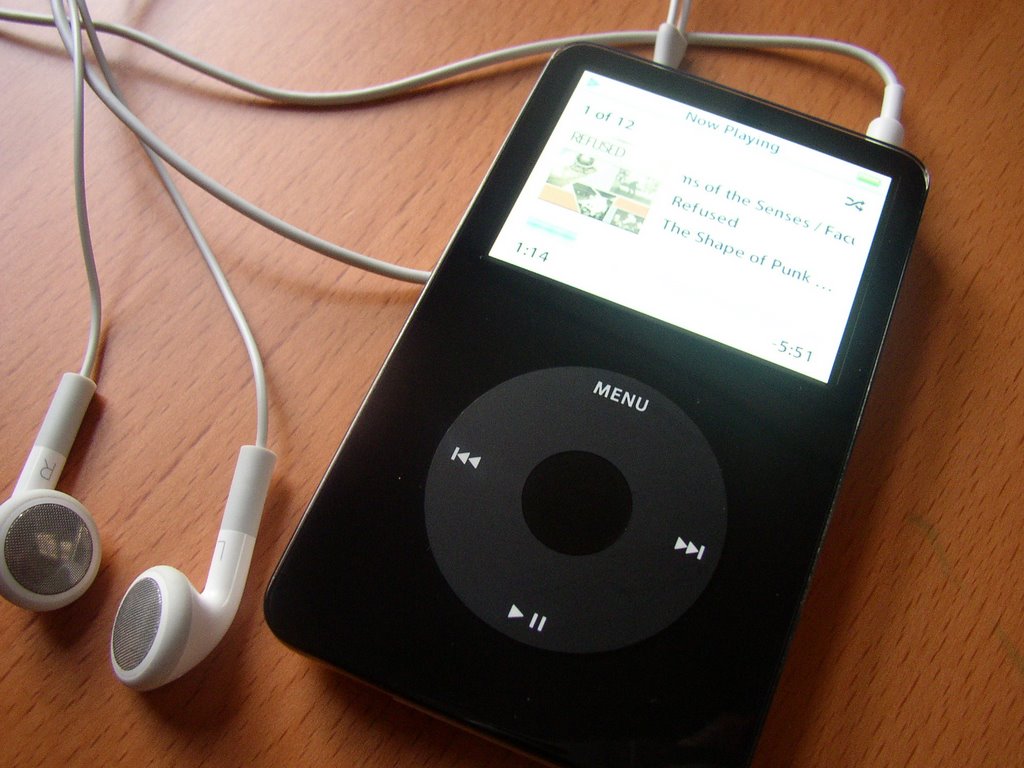
During the summer months, the rules of the group ride state riders may not wear headphones during the ride. I support this rule and I feel it makes the ride safer overall. I mean, it is tough enough to corral 50 riders at 25-30 mph but throw in some loud music and it is an accident waiting to happen. But in October the group becomes smaller and the tempo slacks. And so do some of the rules. From October to May wearing headphones is fair game. For the same reason the headphones are dangerous in the summer, they become a welcomed relief in the winter. The headphones remove the rider from their surroundings just enough to take the edge off the cold. Some club members joke that with the music piped directly into their ears, they feel warmer and insolated, allowing them to tough out another hour or two of cold pavement and biting wind chills.

Tuesday, December 4, 2007